
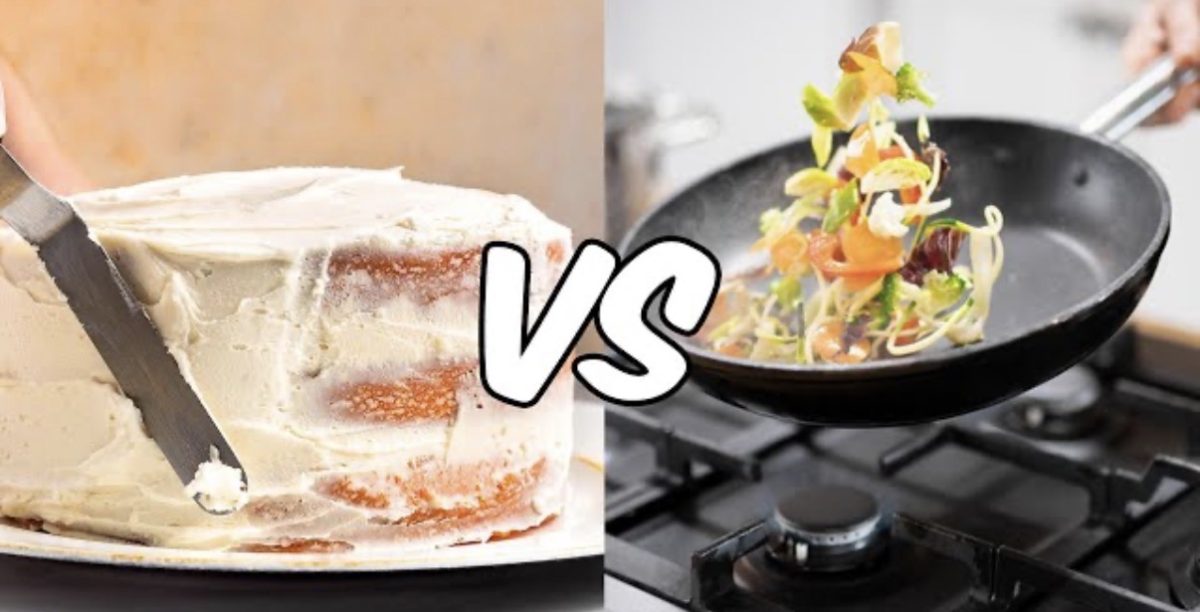
Cooking and baking are both things found in everyday life, and they are both much more difficult than they may seem, especially in a fine dining setting. Although both cooking and baking are difficult in their own special and unique ways, they also have similarities when it comes to precision, flexibility, the need for experience, presentations of dishes, and science.
Baking certainly seems like it takes more precision with the exact measurements that are needed so a cake doesn’t turn into a cookie, or the plating of a dish, or actually coming up with ideas on which flavors to mix with which in order for it to taste fantastic, but, there is also precision necessary for cooking. The perfect sear on a steak so it doesn’t taste like charcoal but also doesn’t taste like raw meat, the perfect amount of time pasta boils so it isn’t too al dente (a little under but still edible) but also isn’t too overcooked. There is a very fine line that defines whether the food is just good or is phenomenal, the food that breaks through the line of just average food.
When it comes to flexibility, many of the baking recipes require everything to be exact or at least a little exact. This also works for cooking because of seasoning. It is important to get seasoning correct, so it doesn’t taste bland, plain, or empty.
Experience is really important in both cooking and baking. A person who is just starting out may know a recipe, however chefs and bakers with experience understand how to do things, when to do them, and how to fix mistakes when they are under a lot of pressure. In cooking, experience helps chefs know how flavors work together and how to cook foods properly. The same goes for baking, where experience is important because bakers must understand how to measure things, what temperatures to use, and how ingredients react with each other. Fine dining restaurants depend on consistency. That consistency usually comes from years of practice and experience with cooking and baking.
Both cooking and baking often require education and training to succeed in fine dining. Many chefs go to school to learn how to use a knife, how to keep food safe, how to prepare food, and how to present it aesthetically. Bakers and pastry chefs also go through training to learn how to make desserts and how to bake precisely. Even though some people can teach themselves, culinary schools help students get ready for the paced and stressful environment of fine dining kitchens. Training also teaches people discipline and teamwork which are both necessary in professional kitchens.
Presentation is a part of fine dining because people often judge food before they even taste it. In cooking, chefs carefully put meals on plates to make them look elegant and appealing. The colors, the size of the portions, and where the food is placed matter when presenting a dish of cooking. Baking also relies heavily on presentation with desserts that are decorated with detailed designs or artistic toppings. In fine dining, presentation can turn a simple meal of cooking and baking into something memorable and impressive. Both baking and cooking require creativity and attention to detail to create dishes that look as good as they taste.
Science plays a role in both cooking and baking. Baking is often considered scientific because ingredients must react correctly for desserts to rise, bake, and maintain the proper texture. Small mistakes in measurements or temperature can completely change the product of baking. Cooking also involves science through heat transfer, chemical reactions, and the way flavors develop during the cooking process. Chefs must understand how different ingredients react to temperatures and techniques of cooking. Even though cooking allows flexibility, both cooking and baking depend heavily on scientific principles to create high-quality dishes in a fine dining environment.